


Page 215 - Demo
P. 215
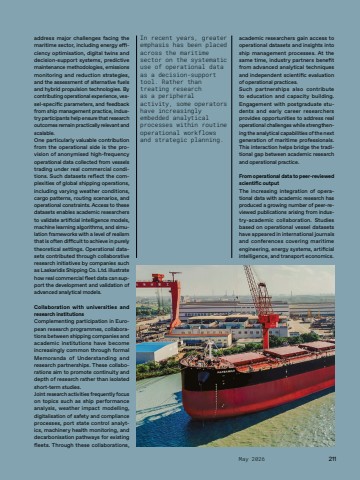
address major challenges facing the maritime sector, including energy efficiency optimisation, digital twins and decision-support systems, predictive maintenance methodologies, emissions monitoring and reduction strategies, and the assessment of alternative fuels and hybrid propulsion technologies. By contributing operational experience, vessel-specific parameters, and feedback from ship management practice, industry participants help ensure that research outcomes remain practically relevant and scalable.One particularly valuable contribution from the operational side is the provision of anonymised high-frequency operational data collected from vessels trading under real commercial conditions. Such datasets reflect the complexities of global shipping operations, including varying weather conditions, cargo patterns, routing scenarios, and operational constraints. Access to these datasets enables academic researchers to validate artificial intelligence models, machine learning algorithms, and simulation frameworks with a level of realism that is often difficult to achieve in purely theoretical settings. Operational datasets contributed through collaborative research initiatives by companies such as Laskaridis Shipping Co. Ltd. illustrate how real commercial fleet data can support the development and validation of advanced analytical models.Collaboration with universities and research institutionsComplementing participation in European research programmes, collaborations between shipping companies and academic institutions have become increasingly common through formal Memoranda of Understanding and research partnerships. These collaborations aim to promote continuity and depth of research rather than isolated short-term studies.Joint research activities frequently focus on topics such as ship performance analysis, weather impact modelling, digitalisation of safety and compliance processes, port state control analytics, machinery health monitoring, and decarbonisation pathways for existing fleets. Through these collaborations, academic researchers gain access to operational datasets and insights into ship management processes. At the same time, industry partners benefit from advanced analytical techniques and independent scientific evaluation of operational practices.Such partnerships also contribute to education and capacity building. Engagement with postgraduate students and early career researchers provides opportunities to address real operational challenges while strengthening the analytical capabilities of the next generation of maritime professionals. This interaction helps bridge the traditional gap between academic research and operational practice.From operational data to peer-reviewed scientific outputThe increasing integration of operational data with academic research has produced a growing number of peer-reviewed publications arising from industry-academic collaboration. Studies based on operational vessel datasets have appeared in international journals and conferences covering maritime engineering, energy systems, artificial intelligence, and transport economics.In recent years, greater emphasis has been placed across the maritime sector on the systematic use of operational data as a decision-support tool. Rather than treating research as a peripheral activity, some operators have increasingly embedded analytical processes within routine operational workflows and strategic planning. May 2026 211


