


Page 290 - Demo
P. 290
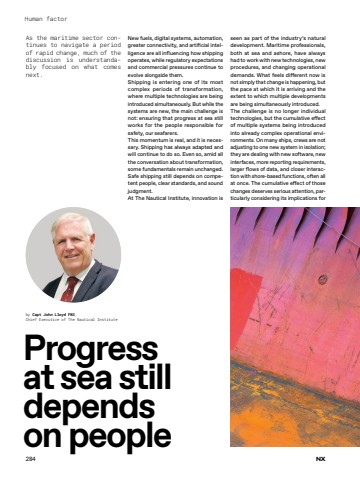
New fuels, digital systems, automation, greater connectivity, and artificial intelligence are all influencing how shipping operates, while regulatory expectations and commercial pressures continue to evolve alongside them. Shipping is entering one of its most complex periods of transformation, where multiple technologies are being introduced simultaneously. But while the systems are new, the main challenge is not: ensuring that progress at sea still works for the people responsible for safety, our seafarers.This momentum is real, and it is necessary. Shipping has always adapted and will continue to do so. Even so, amid all the conversation about transformation, some fundamentals remain unchanged. Safe shipping still depends on competent people, clear standards, and sound judgment.At The Nautical Institute, innovation is seen as part of the industry%u2019s natural development. Maritime professionals, both at sea and ashore, have always had to work with new technologies, new procedures, and changing operational demands. What feels different now is not simply that change is happening, but the pace at which it is arriving and the extent to which multiple developments are being simultaneously introduced.The challenge is no longer individual technologies, but the cumulative effect of multiple systems being introduced into already complex operational environments. On many ships, crews are not adjusting to one new system in isolation; they are dealing with new software, new interfaces, more reporting requirements, larger flows of data, and closer interaction with shore-based functions, often all at once. The cumulative effect of those changes deserves serious attention, particularly considering its implications for by Capt John Lloyd FNI,Chief Executive of The Nautical InstituteProgress at sea still depends on peopleAs the maritime sector continues to navigate a period of rapid change, much of the discussion is understandably focused on what comes next. Human factor284 NX


