


Page 106 - Demo
P. 106
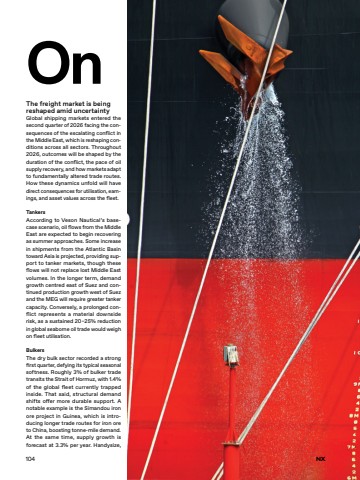
The freight market is being reshaped amid uncertaintyGlobal shipping markets entered the second quarter of 2026 facing the consequences of the escalating conflict in the Middle East, which is reshaping conditions across all sectors. Throughout 2026, outcomes will be shaped by the duration of the conflict, the pace of oil supply recovery, and how markets adapt to fundamentally altered trade routes. How these dynamics unfold will have direct consequences for utilisation, earnings, and asset values across the fleet. TankersAccording to Veson Nautical%u2019s basecase scenario, oil flows from the Middle East are expected to begin recovering as summer approaches. Some increase in shipments from the Atlantic Basin toward Asia is projected, providing support to tanker markets, though these flows will not replace lost Middle East volumes. In the longer term, demand growth centred east of Suez and continued production growth west of Suez and the MEG will require greater tanker capacity. Conversely, a prolonged conflict represents a material downside risk, as a sustained 20%u201325% reduction in global seaborne oil trade would weigh on fleet utilisation.BulkersThe dry bulk sector recorded a strong first quarter, defying its typical seasonal softness. Roughly 3% of bulker trade transits the Strait of Hormuz, with 1.4% of the global fleet currently trapped inside. That said, structural demand shifts offer more durable support. A notable example is the Simandou iron ore project in Guinea, which is introducing longer trade routes for iron ore to China, boosting tonne-mile demand. At the same time, supply growth is forecast at 3.3% per year. Handysize, On104 NX


