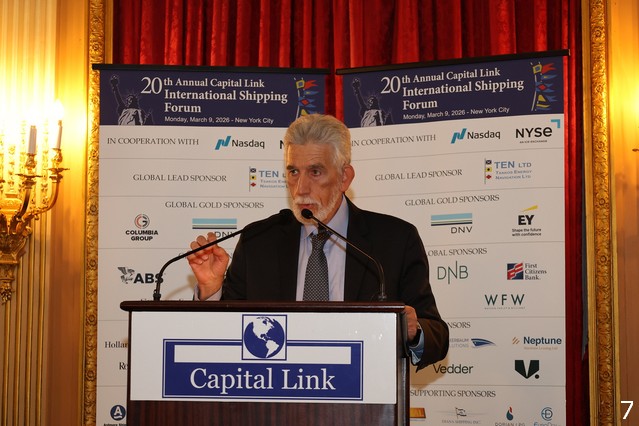
Capital Link’s 20th Annual International Shipping Forum took place with great success on Monday, March 9, 2026, at the Metropolitan Club in New York City. The Forum was held in cooperation with NYSE and Nasdaq.
The event, one of the most prominent global gatherings of maritime leaders, brought together senior executives, shipowners, financiers, policymakers, and institutional investors to discuss the evolving dynamics of the global shipping industry. The caliber of speakers and panelists highlighted the strategic importance of the event as a leading platform for dialogue on policy, capital markets, trade flows, geopolitics, innovation, and sustainability.
Key speakers at the event included the Greek Minister of Maritime Affairs and Insular Policy, Vasilis Kikilias (via webcast), the U.S. Department of Energy’s Special Envoy for Global Energy Integration, Joshua Volz, the Deputy Assistant Secretary for Transportation Affairs at the U.S. State Department, Marco Sylvester, and the Administrator of the U.S. Department of Transportation’s Maritime Administration, Steven Carmel.
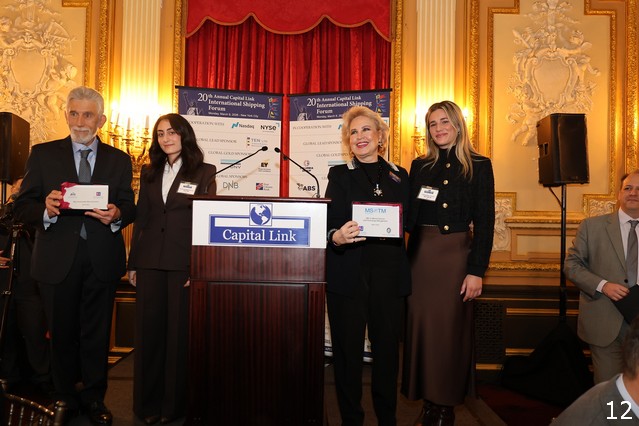
Also, Capital Link hosted a delegation of postgraduate students from the MSc in Marine Science and Technology Management (MSc MSTM) — jointly offered by the University of Piraeus and the Hellenic Naval Academy — and the MSc in Sustainable Blue Economy (MSc SBE) of the University of Piraeus. During the Forum, representatives of the University of Piraeus presented Nicolas Bornozis, President and CEO of Capital Link, and Olga Bornozi, Managing Director, with a Commemorative Plaquette in appreciation of their continued support in fostering meaningful interaction between academia and the maritime industry, and for hosting the student delegation at the Forum.
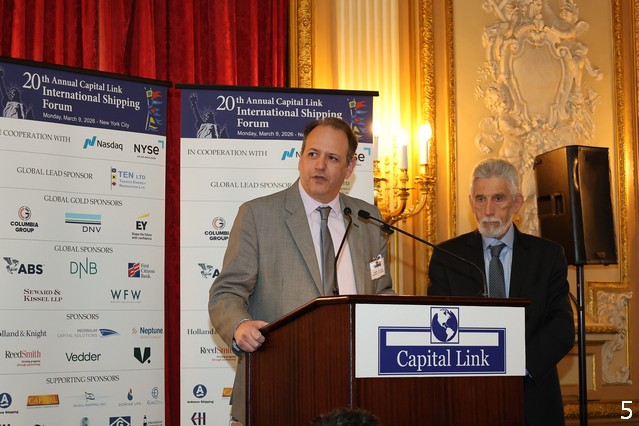
AGENDA
FROM NET ZERO TO NOW WHAT? THE ENERGY TRANSITION DEBATE
Moderator: Ms. Maxi Adamski-de Visser, Counsel – Watson Farley & Williams LLP
Panelists:
· Mr. Richard Tao, Business Development Leader Maritime Advisory, Americas – DNV
· Mr. Konstantinos Stampedakis, Co-Founder & Managing Director – ERMA TECH GROUP
· Dr. Anastasios Aslidis, CFO & Treasurer – Euroseas Ltd. (NASDAQ: ESEA); EuroDry Ltd. (NASDAQ: EDRY); Chief Strategy Officer – Euroholdings Ltd. (NASDAQ: EHLD)
· Mr. Alexander Prokopakis, Executive Director – International Bunker Industry Association (IBIA)
· Mr. Dimitris N. Monioudis, Chairman – Technical Committee – INTERCARGO
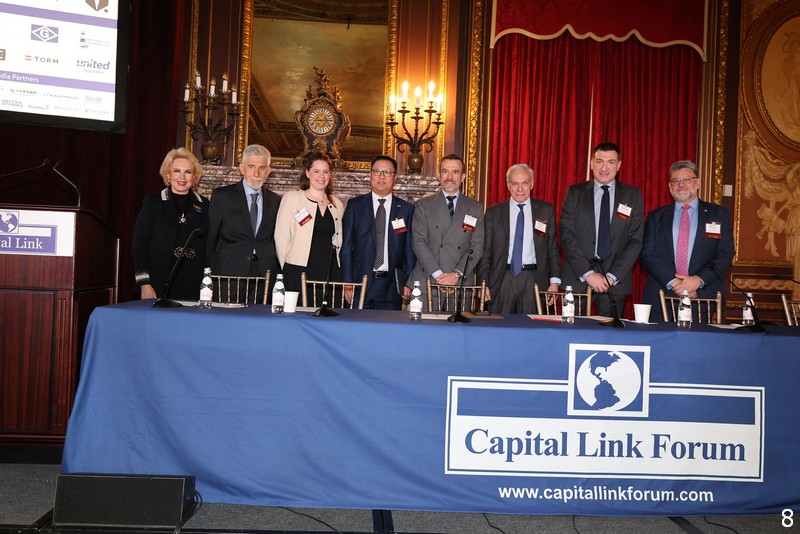
Mr. Richard Tao, Business Development Leader Maritime Advisory, Americas – DNV, stated:
“Despite the IMO’s postponement of its Net-Zero Framework (NZF) adoption—now deferred to 2026 after last year’s impasse, creating short-term uncertainty and a slowdown in alternative fuel newbuild orders since late 2025—the transition is advancing steadily. Geopolitics has delayed global consensus, yet momentum persists through non-regulatory drivers: cargo owners demanding greener supply chains, financial institutions integrating ESG criteria, and ongoing technical advancements. These forces are propelling proactive owners to set ambitious decarbonization paths that outpace mandates, ensuring progress even without full IMO clarity.
Short-term (to 2030), the fuel landscape favors accessible low-GHG options. Container ships, cruises, and car carriers lead adoption, while bulkers and tankers opt for fuel-ready newbuilds (LNG-, methanol-, or ammonia-ready). Biodiesels and bio-LNG dominate due to existing production and infrastructure, with the fleet potentially consuming up to 50 Mtoe of non-oil fuels—primarily ~44 Mtoe LNG, plus smaller volumes of methanol (~6 Mtoe), LPG, ammonia, and hydrogen. New fuels continue facing hurdles of price (2–5x conventional), availability, and infrastructure gaps. Long-term, a multi-fuel future emerges, varying by vessel type and trade routes, incorporating bio- and e-fuels. Energy efficiency remains foundational—”the best fuel is the one you don’t burn”—amplifying savings as low-GHG fuels stay expensive.
Richard highlighted underutilized yet viable efficiency tech, notably wind-assisted propulsion (WAP). With ~80 installations operational and over 100 in the order book, 2026 could mark a breakthrough year. Up to 50,000 vessels (especially bulkers and tankers) are relevant, offering 5–20% fuel reductions (enhanced by regulatory rewards like FuelEU Maritime). Payback periods of 5–10 years are achievable for suitable routes, with costs potentially dropping ~40% at scale; third-party verifications are refining business cases.
AI accelerates the transition via route optimization, fuel efficiency modeling, and emissions monitoring, drawing on mandatory reporting data—though strong cybersecurity and trustworthy frameworks are essential.
In conclusion, to overcome persistent “chicken-and-egg” dilemmas—such as fuel producers needing offtake commitments for financing and owners requiring assured supply—the industry must urgently develop collaborative mechanisms (e.g., expanded green corridors, shared risk tools, or insetting/book-and-claim systems) involving all stakeholders to scale infrastructure cost-effectively and keep long-term net-zero targets realistic. At same time, shipowners must establish clear, flexible strategies now, incorporating scenario planning for varying regulatory outcomes and fuel pathways to navigate uncertainty effectively.”
Mr. Alexander Prokopakis, Executive Director – International Bunker Industry Association (IBIA), stated: “A strong start to the week in New York participating in the panel ‘From Net Zero to Now What? The Energy Transition Debate’ at the Capital Link International Shipping Forum. It was an interesting discussion, reflecting the reality that even with geopolitical tensions and market uncertainty, the energy transition remains at the center of strategic thinking for our industry. The conversation touched on the need for pragmatic solutions, continued investment in new technologies, and the importance of collaboration across the maritime value chain. These themes are not theoretical anymore; they are shaping decisions today for shipowners, energy suppliers, regulators, and service providers.
My thanks to Nicolas, Olga, and the entire Capital Link team for the kind invitation and the excellent organization. Events like this succeed when they manage to combine deep expertise with open dialogue, and this forum delivered exactly that.
A particularly positive element was seeing young professionals attending the session. Their presence is a reminder that the future of shipping depends on attracting and empowering the next generation, who will inherit both the opportunities and the responsibilities of this evolving landscape.”
Mr. Dimitris N. Monioudis, Chairman – Technical Committee – INTERCARGO, stated: “A great start to the week in New York with Dimitris Monioudis representing the global association of dry cargo shipowners, INTERCARGO and joining the panel “From Net Zero to Now What? The Energy Transition Debate” at the Capital Link International Shipping Forum.
The discussion touched upon geopolitical and regulatory uncertainty, whilst highlighting that energy efficiency has been in the past and will continue to be central to strategic decisions across the dry bulk sector.
Currently available pragmatic solutions, such as improved hull coatings, propeller modifications and voyage optimization have been widely adopted as they offer a reasonable return on investment. Bulk carrier operators are not fuel producers and therefore alternative fuels will only be accepted in great numbers, when such fuels are proved to be safe, widely available and financially sustainable.
The unique challenges of the bulk carrier sector, such as short term charters, trading to areas with underdeveloped infrastructure, ownership fragmentation and disproportionate cost of new technology employment compared to newbuilding prices, have yet to be addressed in the regulations re new fuels.
Collaboration across the maritime value chain is essential and all stakeholders including shipowners, charterers, shipyards, ports, energy suppliers, financiers, insurers, regulators, and service providers need to step up and share information transparently in order to achieve optimum performance of investments into new buildings and new technologies.
Many thanks to Nicolas, Olga Bornozis and the Capital Link team for the invitation and excellent organization.”
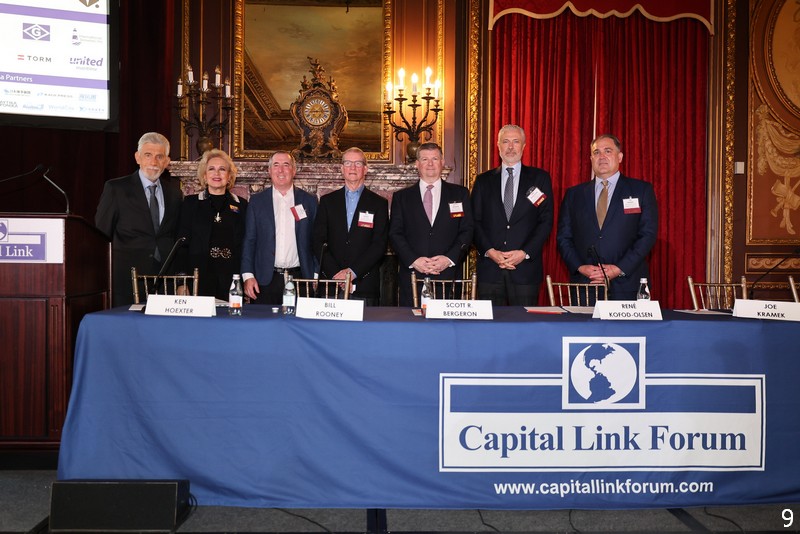
NAVIGATING GLOBAL TRADE & COMMERCE
Moderator: Mr. Ken Hoexter, Managing Director – Bank of America
Panelists:
· Mr. Bill Rooney, Vice President, Sea Logistics Strategic Development – Kuehne + Nagel
· Mr. Scott R. Bergeron, Managing Director, Fleet – Oldendorff Carriers
· Mr. René Kofod-Olsen, Group CEO – V.Group
· Mr. Joe Kramek, President & CEO – World Shipping Council
KEYNOTE ADDRESS
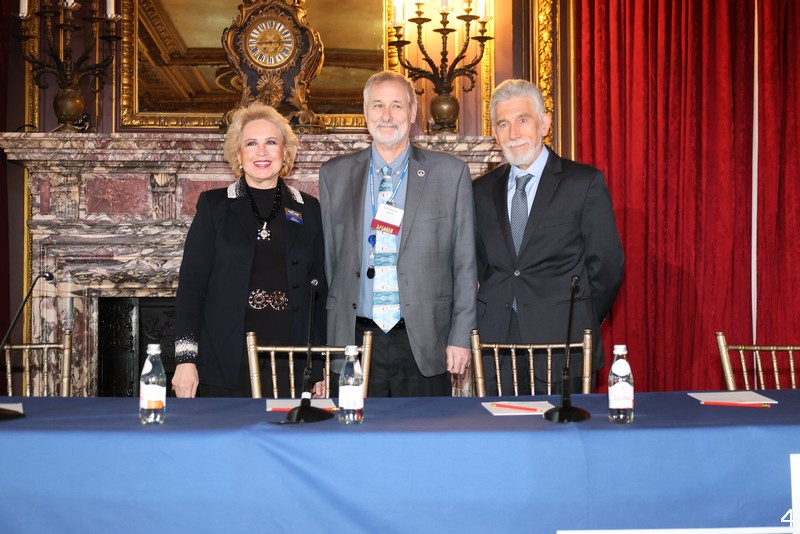
Mr. Stephen M. Carmel, Administrator Maritime Administration (MARAD), U.S. Department of Transportation
Mr. Stephen M. Carmel, in his speech, stated:
“Good morning Ladies and Gentlemen,
It is a pleasure to be here with Capital Link, where the maritime industry meets the capital markets that make it possible. First I don’t have any PowerPoint slides. Disappointing I know. That’s not a mistake or failure of technology. As it happens, I hate PowerPoint, so it is a deliberate choice. In fact one of the first things I did on joining MARAD – day 2 specifically, is ban PowerPoint. I much prefer to talk to people. Meaning its just me talking.
So, Let me begin with a few facts that capture the scale of the challenge we face. Today the United States produces about 0.1 % of global commercial shipbuilding. We have not built a commercial ship for the export market since 1960. In terms of the international market, we produce exactly zero. Yet this is the market we need to build for if we want to build at scale.
We have not one single shipyard capable of building the types of ships that carry our international trade – the 18k teu containerships or big ro/ro’s. They are all too small. Nor do we have yards capable of drydocking and repairing those ships, including the majority of the msp fleet. So not only can we not build our own ships, but we also can’t repair them.
Our U.S.-flag ships carry less than two percent of our international commerce—and not one molecule of international trade in energy. That trade has been completely outsourced. Recently I was asked why no American port operating companies were considered for the ports Hutchison was divesting on either side of the Panama Canal.
My answer was simple. We do not currently have international port operating companies of that scale. Now I know there are some that may quibble with some of this, but do a side by side comparison of international port operators such as PSA, APM, or DP World, or shipbuilders such as Hyundai Heavy or Samsung Heavy with the biggest the US has to offer and then we’ll have a conversation.
Those statistics matter. But they are not just shipyard problems, or port operating problems, or ship management problems. They are symptoms of something deeper.
They are symptoms of structural disengagement from the global maritime system. One of the consequences of that, directly related to the aforementioned statistics, is we do not understand what scale is or what big means in an international context. Here, in the US, were big is almost our middle name, we lost the bubble there. Rebuilding our maritime enterprise means in part, recalibrating what big means and what a system is. Building ships at scale means building for the international market, not domestic. It’s too small. And that means building yards that can do it before we think we can build ships. That means financing at scale, something Title Xi is not designed for.
Shipbuilding follows cargo. Cargo follows logistics networks. Logistics networks follow infrastructure. And capital underwrites all of it. If we want to rebuild American maritime capacity, we must rebuild the entire maritime ecosystem. Together, as a system.
Not a little here, a little there. Not this piece now and that piece later. The entire system. Together, as a system, and at scale. Interactions, not individual pieces are what matters. It is instructive to review The System Lesson from Maritime History. Historically, the United States understood all this. In the nineteenth century, American ports, shipping companies, shipyards, and cargo networks grew together as a single system.
For me, the seminal moment in American maritime history is not the sailing of the Savannah in 1819, what is celebrated on maritime day. It is January 5th, 1818 – a year earlier. That is when the Black Ball Line launched the first regularly scheduled packet service between New York and Liverpool. – this is the birth of liner service. The driving force behind that innovation was Jeremiah Thompson, one of the founders of the line.
Jeremiah Thompson did as much to shape the evolution of the merchant marine as Malcolm McLean would do a century and a half later.
Yet almost no one remembers his name, but what Thompson did was transformative. Jeremiah Thompson did not invent any new technology. The ships already existed. The navigation techniques already existed. The trade routes already existed. What Thompson invented was a system.
He introduced the revolutionary idea that ships would depart on fixed dates whether they were full or not. That simple idea reorganized the entire maritime economy. Cargo networks expanded because shippers could rely on predictable service. Ports expanded to support those flows. Shipbuilding expanded to meet the demand. Capital flowed into the industry.
And the United States became one of the dominant maritime trading nations of the nineteenth century. The biggest shipbuilder and biggest merchant marine in the world.
The innovation was not a machine.
The innovation was a system of organization.
We saw the same pattern again a century and a half later with Malcolm McLean.
McLean did not invent any revolutionary technology either.
Cranes already existed.
Steel boxes already existed.
Ships already existed. In fact even a container ship existed.
The World’s First was The Clifford J. Rogers – she was the first ship specifically designed and built from the hull up to carry containers. She sailed for the White Pass and Yukon Route (WP&YR) and was launched in 1955, the year before the McLeans Ideal X, which was a converted tanker.
McLean is usually the one in the history books because he standardized the system. The White Pass system was a “closed loop” designed for a specific northern route. McLean’s genius was in creating a system that could work at every port in the world, eventually leading to the 20-foot and 40-foot “intermodal” standards we use today.
At its core, containerization is simply a steel box with a door on it.
There is nothing technologically earth-shattering about that.
What McLean did was far more important.
He created a system that integrated ships, ports, trucks, railroads, and cargo handling into a single logistics architecture and did so globally, eventually integrating the world into one big logistics system. In doing so, he took Jeremiah Thompson’s 150-year-old innovation of liner service and transformed it. The result was containerization—and the global trading system that powers the modern world economy. History remembers the technology. But the people who change industries, and the trajectory of history, are the ones who redesign the system.
Sometimes we get too focused on the gadgets and gizmos. The individual technologies. In the US that is, I think, one of our challenges. We are ruled by the cult of the exquisite. But the most transformative innovations in maritime history have not been technological inventions. They have been system innovations. New ways of organizing the entire maritime ecosystem.
Which makes me wonder about our maritime policy – we support and incentivize at the individual asset level – ship, port, or yard. Yet what matters is the system architecture, which is ignored in our policy. I have not gotten my head around that yet, but I’m working on it. Today we are standing at the edge of another such transformation. The maritime industry is entering a period of rapid technological change. We in the US get one chance to get it right.
Autonomous vessel technologies.
Digital cargo visibility.
Artificial intelligence applied to logistics networks.
Robotic terminal operations.
Advanced fuels and propulsion systems.
Potentially even next-generation nuclear propulsion technologies.
These developments matter.
But none of them, by themselves, will transform the maritime industry. Just as the steel box did not transform global trade by itself. The transformation happens when these technologies are integrated into a new operating system for maritime logistics. A new architecture connecting ships, ports, energy systems, digital infrastructure, cargo flows, labor and capital. Labor is often left out of this conversation but we loose overall if we don’t win here. We need to transition to treating the maritime workforce as a force structure, not just a labor market, a strength to be leveraged, not a cost to be minimized.
That is where real innovation happens. And that is the opportunity before us today. That is also exactly what the U.S. Maritime Action Plan is designed to do. The MAP is built around four pillars:
Rebuilding American shipbuilding and ship repair capacity
Reforming and expanding the maritime workforce
Protecting the maritime industrial base
Strengthening national security and maritime resilience
These pillars are not isolated programs.
They are designed to reinforce one another.
Asking which pillar matters most is like asking which of your children is your favorite.
They all matter.
Because together they rebuild the maritime system that supports American economic power and national security.
The United States has five coastlines.
We sit on three oceans that are at the nexus of trade routes.
We border a substantial gulf.
We possess the largest freshwater lake system in the world.
And we operate the most economically integrated inland waterway system on the planet.
Geography alone should make us one of the world’s natural maritime. But geography does not create maritime power. Systems do. And we forgot that.
Next, Innovation Must Become Structural.
One of the central insights behind the Maritime Action Plan is that innovation must become structural in the U.S. maritime sector. We do not just need to innovate. We need to change the nature of how we innovate. We need to build a system where innovation happens continuously and spontaneously. Ports, shipyards, logistics networks, shipping companies, and energy systems must function together as an innovation ecosystem. Ports are natural laboratories for this.
They are where logistics networks converge.
They are where digital systems meet physical cargo flows.
They are where operational innovation becomes reality.
It will not be long, for example, before the global maritime industry must begin developing operational standards for nuclear-powered commercial vessels, including small modular reactors. SMR’s offer great promise for the US maritime industry, but only if we approach it from the perspective of the broad trading system. What happens when you decouple the speed of the system from energy cost and the velocity of the network can increase without cost. The network cost reductions possible are staggering. So if the proper unit of analysis is used, the network, it’s a great opportunity. If we focus on the asset, the technology, we’ll get our clock cleaned and we’ll be playing by rules we had no role in shaping as that market develops.
If we fail to lean forward into that future, others will.
But innovation alone is not enough. The strategic currency of the maritime system in the twenty-first century will be resilience. For decades maritime economics optimized primarily for efficiency. Lowest cost. Just-in-time supply chains. Maximum throughput. That model worked in a stable world.
But the world we operate in today is different.
Geopolitical competition is intensifying.
Energy markets are destabilizing.
Sea lanes are becoming contested.
Supply chains are fragmenting.
Potential adversaries increasingly pursue strategies designed to attack systems rather than platforms. It even has a name – Systems Destruction warfare.
Disrupt the logistics networks.
Disrupt the supply chains.
Disrupt the infrastructure that allows economies and militaries to function.
This is what is happening at a small scale and localized level with Iran and we can see the affects. Imagine then a peer competitor doing that at scale, globally.
In that environment resilience becomes strategic infrastructure.
Resilience means diversified trade routes.
Flexible logistics networks.
Domestic repair capacity.
Surge shipping capability.
Ports and logistics systems capable of absorbing shocks without systemic failure.
Efficiency will always matter.
But today resilience must matter just as much.
And resilience requires capacity.
Capacity requires investment.
And that is the Opportunity Before Us
The Maritime Action Plan provides the strategy.
But strategy only matters if it is executed.
Execution requires participation from the entire maritime ecosystem.
Shipowners.
Labor
Ports.
Shipyards.
Technology developers.
And the capital markets represented in this room.
Federal policy can help create the architecture.
But the maritime industry—and the investment community that supports it—must build the system itself.
In closing –
The United States did not become a maritime power because we built a few great ships.
Or a few great ports – we are of course in what used to be the greatest now.
From roughly 1825 through the early 20th century New York was the greatest commercial port on earth. it was both the port and control center of global shipping networks. But now ranks anywhere between 15th and 25th worldwide depending on when and how you measure it. The story of our maritime heritage in one port.
We became a maritime power because we built a maritime system that worked.
That system once made the United States one of the dominant maritime nations in the world.
Over time we allowed that system dominance to slip away.
The Maritime Action Plan is our opportunity to reverse that trajectory.
Maritime power, not naval power, was central to the founding of the nation and part and parcel of its rise to greatness. Then we let it slip away from us, and now face the unpleasant prospect of being held hostage to hose we have outsourced the elements of our maritime power to The Maritime Action Plan is about rebuilding that system for the twenty first. In order to do so we must recognize what the Maritime action plan is. It is certainly an architecture or framework for action. But it will be a tragic lost opportunity if that’s all it is. It is far more. It is a evangelical call to renew, reinvigorate, indeed reinvent our nations very relationship with our maritime heritage. Maritime power built us, but we took it for granted. Now we must seize this moment that history affords us and get it back.
Thank you.”
SHAPING THE FUTURE OF MARITIME THROUGH STRATEGIC INNOVATION
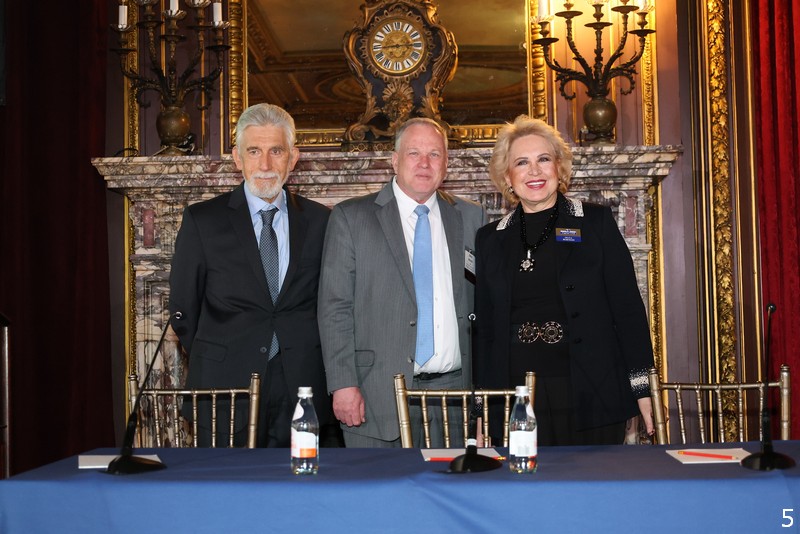
Presented by:
Mr. David Walker, Vice President, Global Government – ABS
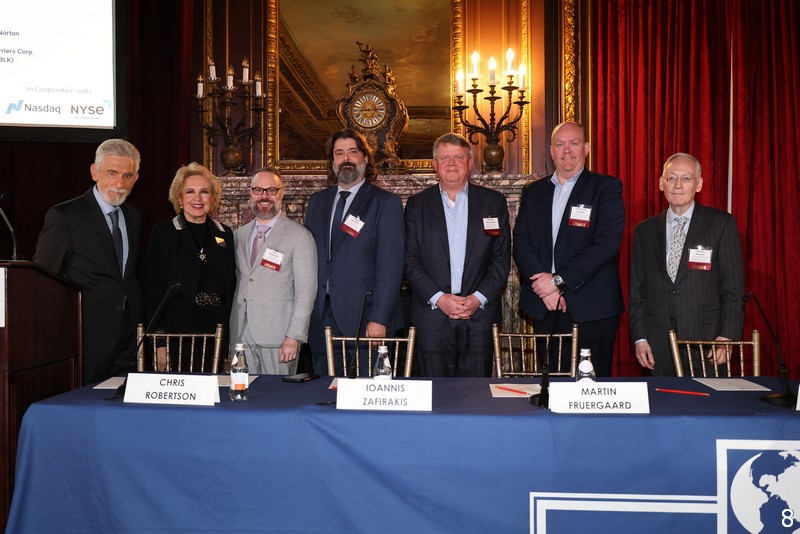
DRY BULK SHIPPING SECTOR PANEL
Moderator: Mr. Chris Robertson, Vice President – Deutsche Bank
Panelists:
· Mr. Ioannis Zafirakis, Director & President – Diana Shipping Inc. (NYSE: DSX)
· Mr. Martin Fruergaard, Chief Executive Officer – Pacific Basin Shipping (OTCPK: PCFBY) (HK: 2343)
· Mr. Mads Boye Petersen, CEO – Pangaea Logistics Solutions Ltd. (NASDAQ: PANL)
· Mr. Hamish Norton, President – Star Bulk Carriers Corp. (NASDAQ: SBLK)
GLOBAL SHIP FINANCE: CAPITAL, LEASING & MARKET SHIFTS
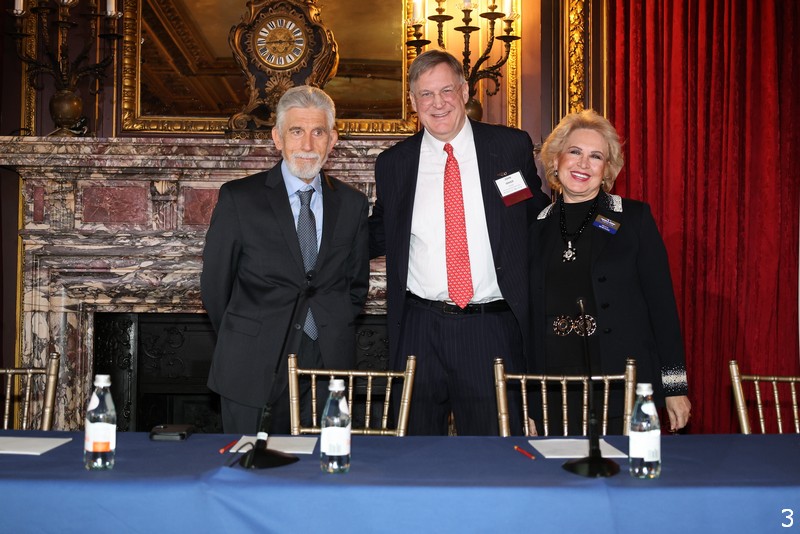
Presented by:
Mr. John Imhof, Shareholder – Vedder
FOLLOW THE MONEY AT SEA – SHIP FINANCE AND CAPITAL STRATEGIES
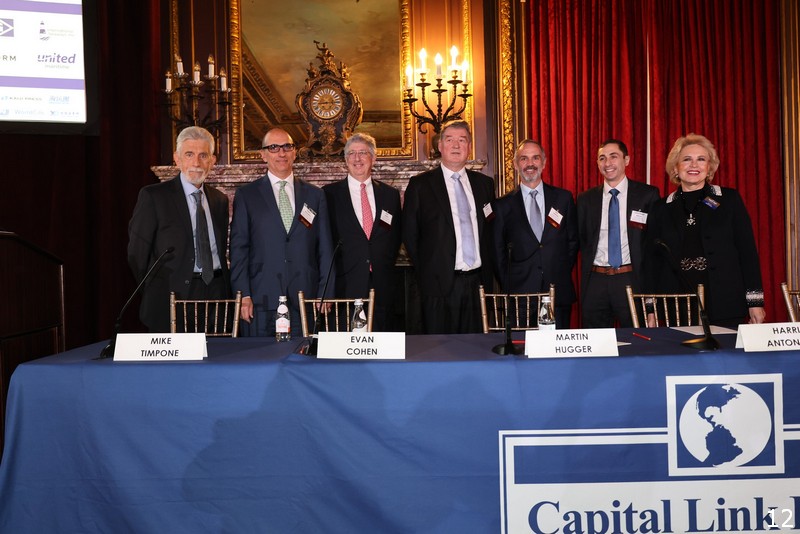
Moderator: Mr. Mike Timpone, Partner – Holland & Knight LLP
Panelists:
· Mr. Evan Cohen, Managing Director & Group Head of Maritime Finance – First Citizens Bank
· Mr. Martin Hugger, Managing Director – Meerbaum Capital Solutions Inc.
· Mr. Harris Antoniou, Founder & Managing Director – Neptune Maritime Leasing Ltd.
· Mr. Christopher Avella, CFO – Scorpio Tankers Inc. (NYSE: STNG)
KEYNOTE SESSION
CHARTING THE FUTURE OF NET-ZERO: U.S. LEADERSHIP AND GLOBAL ALIGNMENT
DAS Marco Sylvester
Deputy Assistant Secretary for Transportation Affairs
U.S. Department of State
With
Mr. Craig Koehne, Regional President, Americas – DNV
LUNCHEON & KEYNOTE REMARKS
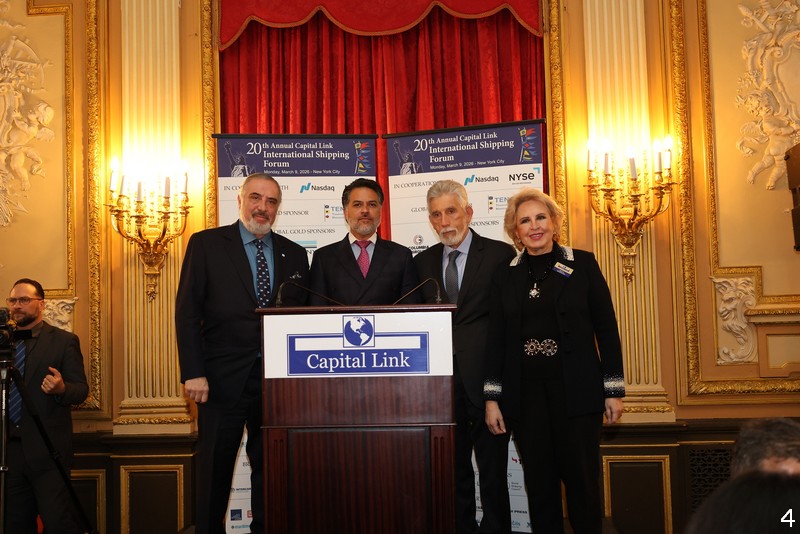
Mr. Joshua Volz, Special Envoy for Global Energy Integration – U.S. Department of Energy:
“Without Greek shipping the world would have no trade”
In his speech, Mr. Volz referred to a rapidly changing geopolitical and economic environment, noting that global realities evolve so quickly that “you can write something on Friday and by Monday it may no longer be relevant.”
He began by highlighting immediate security challenges in the Persian Gulf, where “more than 300 Greek ships and countless Greek seafarers” are currently “at risk.”
A central point of his intervention was the vulnerability of global shipping. As he emphasized, “global shipping is not secure,” while the fact that “more than 75%” of ships are built in China creates “risks and instability in the global architecture of shipping.”
He also stressed the strategic importance of maritime transport, reminding the audience that “80 to 90 percent of global trade is conducted by sea,” while “20 to 21 percent is carried by Greek ships.” Without this capability, he underlined, entire regions of the planet would face serious trade difficulties, since “without Greek shipping, Latin America, the European Union, all of Central Asia, and the entire continent of Australia would have no trade.”
He noted that the shipping sector operates in an environment of multiple risks, facing “financial risk, security risk, weather risk, market risk, and capital flow risk,” which must be managed daily in order to safeguard the stability of the global economy.
In this context, he called for stronger cooperation between the United States and Greece, emphasizing that Greek shipping is not merely a commercial activity but “a bridge for creating security, reducing risk, and providing alternative options.”
“What we are trying to do in the United States is strengthen our cooperation with the Greek shipping industry in order to increase the security of supply chains, enhance the safety of global trade, and become less dependent on sources and individual actors that do not share the same values as we do,” he said.
He also proposed the creation of closer energy and trade ties, arguing that there should be “a dedicated maritime bridge between the United States and Greece” for transporting American energy resources to Europe.
In closing, he described Greek shipping as a cornerstone of the Greece–U.S. relationship, calling it “the most important and globally influential industry in Greece,” and argued that leveraging this cooperation could “transform the relationship for the decades ahead.”
The Capital Link forum served as an important platform for dialogue on the developments shaping international shipping, energy connectivity, and maritime security.
Minister Vasilis Kikilias, Minister of Maritime Affairs and Insular Policy – Hellenic Republic
(via webcast)
Addressing participants through a recorded message, Minister of Maritime Affairs, Mr. Vasilis Kikilias said he was “very pleased to address Capital Link” and thanked the organizers Nicolas and Olga Bornozis for the invitation. He explained that “urgent matters” had kept him in Piraeus and Athens, preventing him from attending in person.
He also stressed that “it is more than obvious that we have very close relations with the United States of America on issues of shipping, shipyards, energy, and international matters such as the IMO.”
Mr. Kikilias also sent greetings to the participants in New York, saying he wished “to greet my friends Marco Sylvester and Joshua Volz,” and wished “every success to everyone” in the proceedings of the forum.
ANALYST PANEL
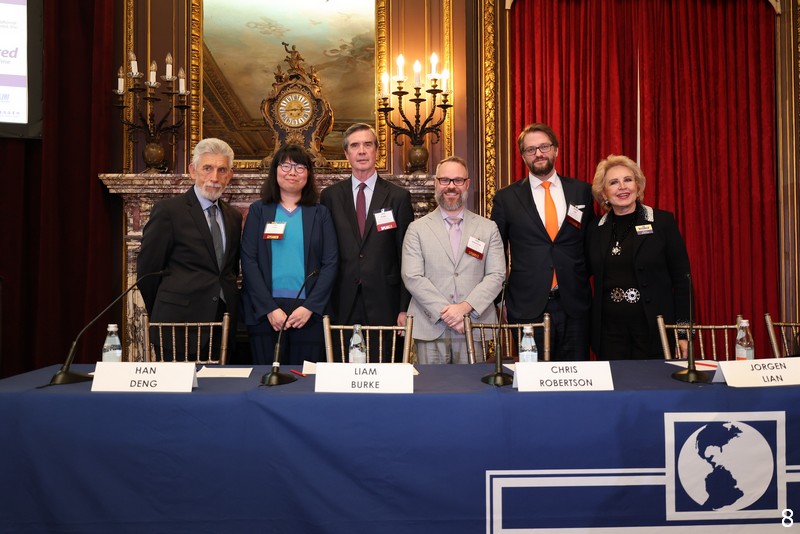
Moderator: Ms. Han Deng, Partner – Reed Smith LLP
Panelists:
· Mr. Liam Burke, Managing Director – B. Riley Securities
· Mr. Chris Robertson, Vice President – Deutsche Bank
· Mr. Jorgen Lian, Senior Equity Research Analyst – DNB Carnegie
Ms. Han Deng, Partner – Reed Smith LLP stated: “The Analyst Panel at this year’s Capital Link International Shipping Forum convened at a moment of extraordinary market tension and delivered a discussion that matched it. With the Hormuz Strait crisis entering its tenth day alongside the 841-day-old Red Sea disruption, the panel addressed what may be the most complex geopolitical overlay the shipping markets have faced in a generation. Panelists Liam Burke of B. Riley Securities, Chris Robertson of Deutsche Bank, and J?rgen Lian of DNB Carnegie brought complementary perspectives across sectors. The conversation moved quickly from the immediate – record VLCC rates, suspended war risk coverage, stranded container capacity – to the structural: whether geopolitical disruption has permanently altered how shipping routes, insurance, and ultimately equities should be priced. On tankers, the panel wrestled with the paradox of record earnings alongside genuine vessel risk – a dynamic that traditional valuation models were not built to capture. On gas shipping,
the Qatar LNG exposure through Hormuz raised pointed questions about whether this crisis accelerates a structural rethink of global gas infrastructure. On containers, the panel briefly noted the Hapag-Lloyd acquisition of ZIM as a signal of ongoing consolidation at the top of the market, before turning attention to the feeder and regional trades segment. The panel also discussed about the global supply chain, dark fleet and energy security. Across all sectors, the valuation question was central. The panel discussed about NAV as a reliable floor rather than a ceiling, with cash flow, charter coverage, and scenario-based frameworks increasingly complementing it as investors seek a fuller picture of value in a structurally disrupted market.”
THE INVESTMENT CASE FOR BENCHMARKING FREIGHT COSTS IN CHEMICAL, AGRICULTURAL, AND BASIC MATERIALS MARKETS
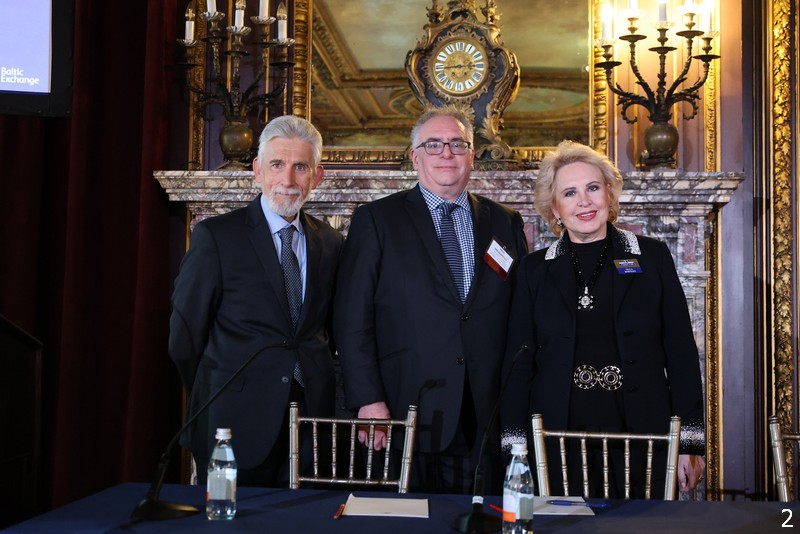
Presented by:
Mr. Paul Mazzarulli, Americas Representative – The Baltic Exchange
GAS SECTOR PANEL
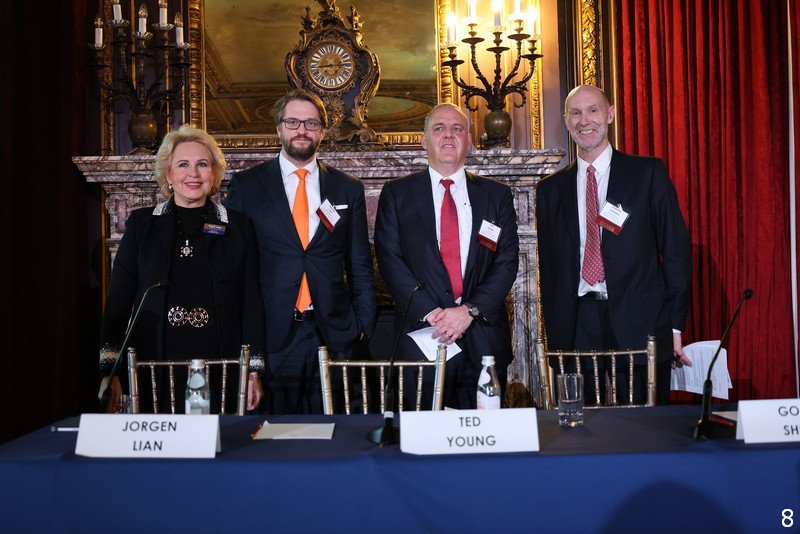
Moderator: Mr. Jorgen Lian, Senior Equity Research Analyst – DNB Carnegie
Panelists:
· Mr. Ted Young, CFO – Dorian LPG Ltd. (NYSE: LPG)
· Mr. Gordon Shearer, Senior Advisor – Poten & Partners
SHIPPING THROUGH THE INVESTOR LENS: STRATEGY ACROSS CYCLES
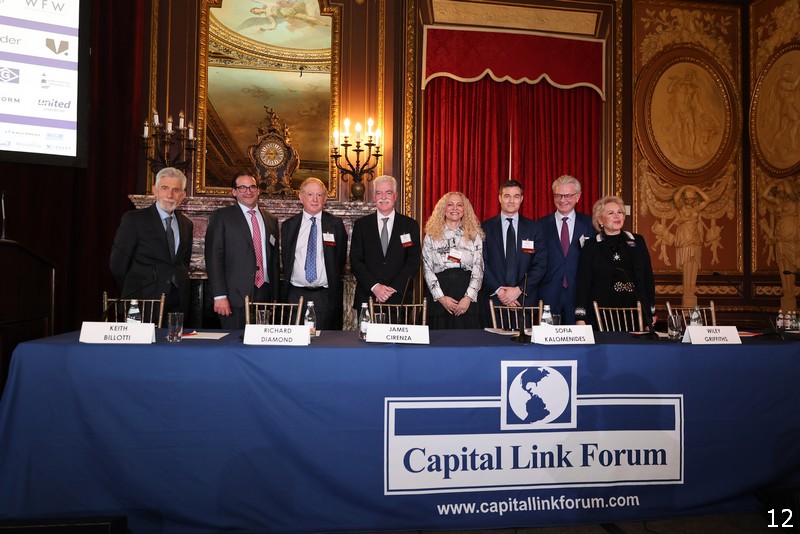
Moderator: Mr. Keith Billotti, Partner – Seward & Kissel LLP
Panelists:
· Mr. Richard Diamond, Principal – Castlewood Capital Partners, LLC
· Mr. James Cirenza, Managing Director – DNB Carnegie
· Ms. Sofia Kalomenides, Partner – Europe Central Capital Markets Leader – EY
· Mr. Wiley Griffiths, Global Head of Transportation Investment Banking, Managing Director – Morgan Stanley
· Mr. Ole B. Hjertaker, CEO – SFL Corp. Ltd. (NYSE: SFL)
TANKER SHIPPING SECTOR PANEL
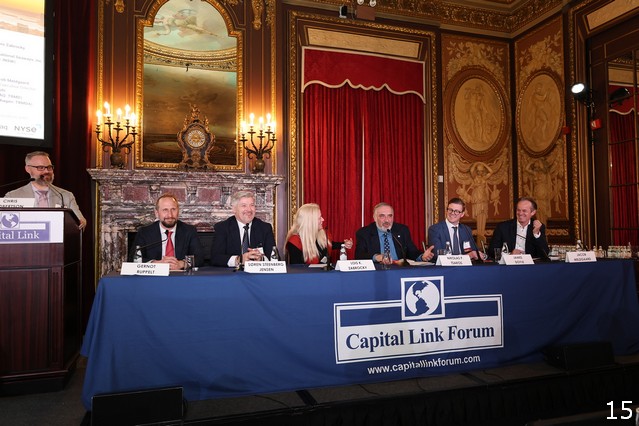
Moderator: Mr. Chris Robertson, Vice President – Deutsche Bank
Panelists:
· Mr. Gernot Ruppelt, CEO – Ardmore Shipping Corp. (NYSE: ASC)
· Mr. Søren Steenberg Jensen, EVP S&P – Hafnia Ltd (NYSE: HAFN) (OSLO: HAFNI)
· Ms. Lois Zabrocky, CEO – International Seaways, Inc. (NYSE: INSW)
· Dr. Nikolas P. Tsakos, Founder & CEO – TEN Ltd. (NYSE: TEN); Chairman – INTERTANKO (2014-2018)
· Mr. James Doyle, Head of Corporate Development & IR – Scorpio Tankers Inc. (NYSE: STNG)
· Mr. Jacob Meldgaard, CEO & Executive Director – TORM plc (NASDAQ: TRMD) (Copenhagen: TRMDA)
PARTICIPATING SHIPPING COMPANIES
· Ardmore Shipping Corp. (NYSE: ASC)
· Diana Shipping Inc. (NYSE: DSX)
· Dorian LPG Ltd. (NYSE: LPG)
· EuroDry Ltd. (NASDAQ: EDRY)
· Euroholdings Ltd. (NASDAQ: EHLD)
· Euroseas Ltd. (NASDAQ: ESEA)
· Genco Shipping & Trading Ltd. (NYSE: GNK)
· International Seaways, Inc. (NYSE: INSW)
· Pacific Basin Shipping (OTCMKTS: PCFBY) (HK: 2343)
· Pangaea Logistics Solutions Ltd. (NASDAQ: PANL)
· Pyxis Tankers Inc. (NASDAQ: PXS)
· Scorpio Tankers Inc. (NYSE: STNG)
· Star Bulk Carriers Corp. (NASDAQ: SBLK)
· TEN Ltd. (NYSE: TEN)
· TORM plc (NASDAQ: TRMD)
THE FORUM WAS ORGANIZED:
SPONSORS
IN COOPERATION WITH: NASDAQ • New York Stock Exchange (NYSE)
GLOBAL LEAD SPONSOR: TEN Ltd.
GLOBAL GOLD SPONSORS: DNV • EY
GLOBAL SPONSORS: ABS • DNB • First Citizens Bank • Seward & Kissel LLP • WFW
SPONSORS: Holland & Knight • Meerbaum Capital Solutions Inc. • Neptune Maritime Leasing Ltd. • Reed Smith LLP • Vedder • V.Group
SUPPORTING SPONSORS: Ardmore Shipping Corp. • Diana Shipping Inc. • Dorian LPG Ltd. • EuroDry Ltd. • Euroholdings Ltd. • Euroseas Ltd. • Flott & Co. • Genco Shipping & Trading Ltd. • International Seaways, Inc. • Pangaea Logistics Solutions Ltd. • Pyxis Tankers Inc. • Scorpio Tankers Inc. • Seanergy Maritime Holdings Corp. • Singhai Marine Services • Star Bulk Carriers Corp. • SteelShips LLC • TORM plc • United Maritime Corp.
BREAKFAST SPONSORS: Castor Maritime Inc. • Toro Corp.
SUPPORTING ORGANIZATIONS: Intercargo • NYMAR – New York Maritime Inc. • SEA LNG • WSC – World Shipping Council • Young Shipping Professionals New York
MEDIA PARTNERS: All About Shipping • Athens Macedonian News Agency • Elnavi • The Japan Maritime Daily • Kaiji Press • Marine Circle • Maritimes.gr • Naftika Chronika • Nafs Group • The Maritime Executive • Robban Assafina • World Oils • Xinde Marine News
FOR MORE INFORMATION:
Please visit forum’s website: https://capitallink.com/forums/20th-annual-capital-link-international-shipping-forum/
Please contact:
NEW YORK // Mrs. Olga Bornozi & Mrs. Eleni Bej
obornozi@capitallink.com ; ebej@capitallink.com or + 1 212 661 7566
For sponsorship opportunities please contact: Nicolas Bornozis, Olga Bornozi or Anny Zhu at forum@capitallink.com or call +1 (212) 661-7566.
Or visit:
https://capitallink.com/forums/20th-annual-capital-link-international-shipping-forum/ https://capitallink.com/
https://capitallink.com/forums-home/
ORGANIZERS
Founded in 1995, Capital Link is a New York based investor relations, financial communications and advisory firm with a strategic focus on the maritime, commodities and energy sectors, MLPs, as well as Closed-End Funds and ETFs. In addition, Capital Link organizes 18 high quality Investment Forums, and multiple webinars and podcasts, focusing on maritime transportation and U.S. investment products in 11 countries in the United States, Europe and Asia, in key industry centers, such as New York, London, Oslo, Hamburg, Athens, Limassol, Shanghai, Singapore, Tokyo, Hong Kong, and Dubai, all of which are known for combining rich educational and informational content with unique marketing and networking opportunities. Capital Link is a data partner of the Baltic Exchange. Based in New York City, Capital Link has presence in London, Athens & Oslo.
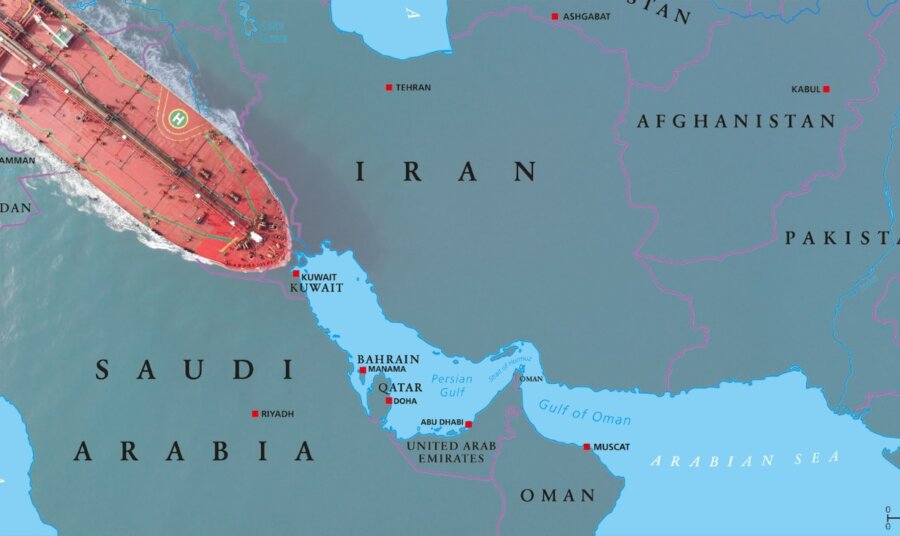
«Όχι» της ΕΕ στα «διόδια» για τη διέλευση πλοίων από τα Στενά του Ορμούζ
Η Ευρωπαϊκή Ενωση απορρίπτει την ιδέα των «διοδίων» για την διέλευση του Στενού του Ορμούζ, όπου η ελευθερία της ναυσιπλοΐας πρέπει να διατηρηθεί, δήλωσε…
ΕΒΕΠ: Οι πέντε προτάσεις στις Βρυξέλλες για τη θωράκιση της ελληνικής επιχειρηματικότητας
Τη θωράκιση της ελληνικής επιχειρηματικότητας απέναντι στις ραγδαίες γεωπολιτικές προκλήσεις έθεσε επί τάπητος η διοίκηση του Ε.Β.Ε.Π. κατά τον πρόσφατο κύκλο επαφών της στις…
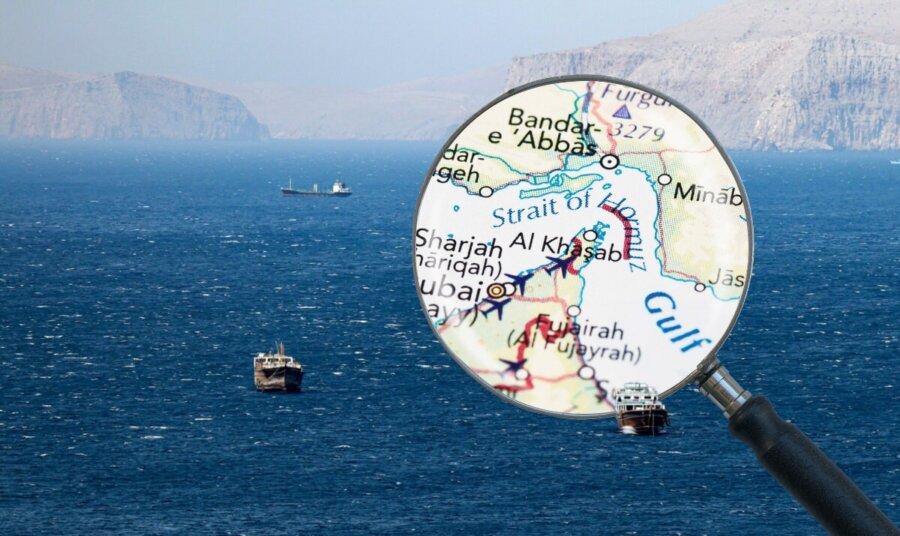
Ιράν: O «χάρτης» ασφαλούς διέλευσης από τα Στενά του Ορμούζ
Το ναυτικό των Φρουρών της Επανάστασης ανακοίνωσε τις πρώτες πρωινές ώρες ότι τα πλοία τα οποία διέρχονται από τα Στενά του Ορμούζ θα πρέπει…
Αλ. Εξάρχου: Στα σκαριά νέο FSRU
Η Atlantic SEE LNG Trade αναμένει να οριστικοποιήσει αρκετές συμφωνίες πώλησης Υγροποιημένου Φυσικού Αερίου (ΥΦΑ) με αγοραστές σε όλη την Ανατολική Ευρώπη τους επόμενους…
Ozellar Marine Manages Hybrid Fleet Connectivity with Navarino’s Infinity
Navarino announced a collaboration with Ozellar Marine, in order to help the company’s transition to a flexible, hybrid connectivity strategy across its growing fleet.…
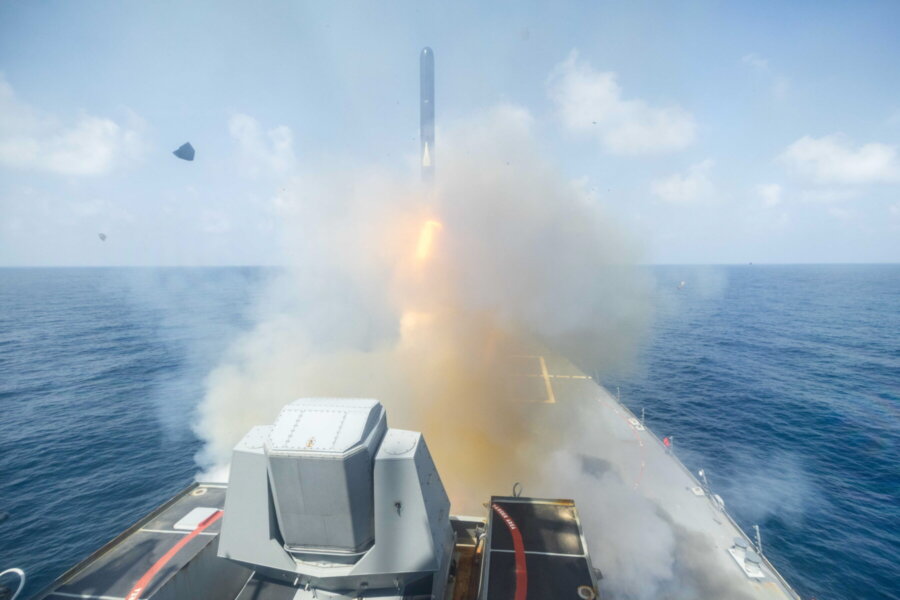
Σε «απόσταση βολής» οι δυνάμεις των ΗΠΑ εν αναμονή εφαρμογής της συμφωνίας
Οι αμερικανικές ένοπλες δυνάμεις θα διατηρήσουν τα στοιχεία τους που έχουν αναπτυχθεί κοντά στο Ιράν ωσότου εφαρμοστεί πλήρως «αληθινή συμφωνία», διεμήνυσε αργά χθες Τετάρτη…
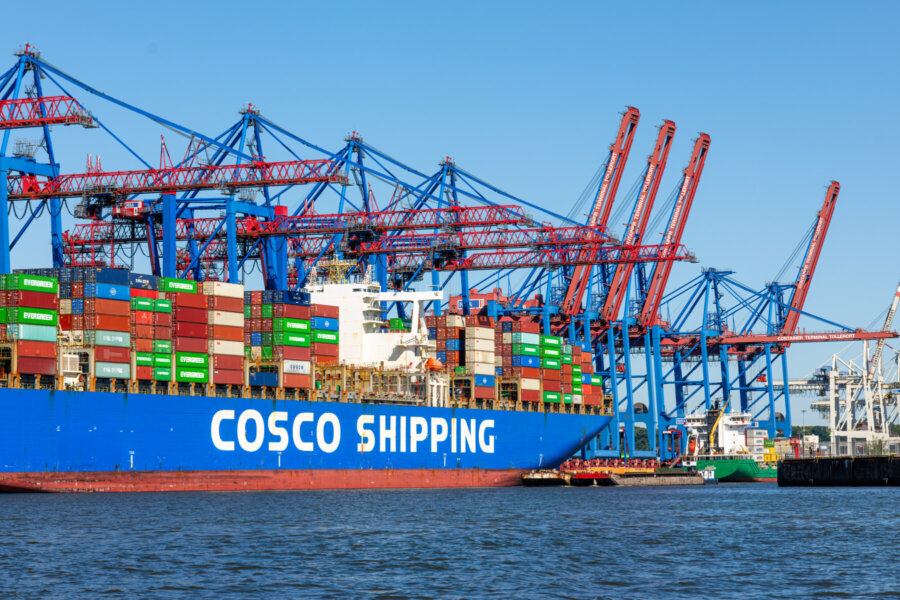
H COSCO κοντά σε deal άνω των $2 δισ.
Σε συζητήσεις με το ναυπηγείο Hudong-Zhonghua Shipbuilding της CSSC για παραγγελία 12 containerships διπλού καυσίμου LNG βρίσκεται η COSCO Shipping Holdings, σύμφωνα με ναυλομεσιτικές…
Ανθεκτική η ελληνική οικονομία, σύμφωνα με έκθεση της ΕΥ
Η οικονομική δραστηριότητα στην Ελλάδα παρέμεινε ανθεκτική και, μάλιστα, εμφανίστηκε ελαφρώς ενισχυμένη προς το τέλος του 2025, στηριζόμενη στην ισχυρή εγχώρια ζήτηση, συμπεριλαμβανομένων επενδύσεων…