


Page 270 - Demo
P. 270
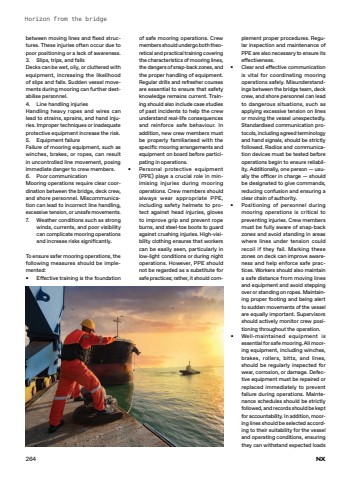
between moving lines and fixed structures. These injuries often occur due to poor positioning or a lack of awareness.3. Slips, trips, and fallsDecks can be wet, oily, or cluttered with equipment, increasing the likelihood of slips and falls. Sudden vessel movements during mooring can further destabilise personnel.4. Line handling injuriesHandling heavy ropes and wires can lead to strains, sprains, and hand injuries. Improper techniques or inadequate protective equipment increase the risk.5. Equipment failureFailure of mooring equipment, such as winches, brakes, or ropes, can result in uncontrolled line movement, posing immediate danger to crew members.6. Poor communicationMooring operations require clear coordination between the bridge, deck crew, and shore personnel. Miscommunication can lead to incorrect line handling, excessive tension, or unsafe movements.7. Weather conditions such as strong winds, currents, and poor visibility can complicate mooring operations and increase risks significantly.To ensure safer mooring operations, the following measures should be implemented:%u2022 Effective training is the foundation of safe mooring operations. Crew members should undergo both theoretical and practical training covering the characteristics of mooring lines, the dangers of snap-back zones, and the proper handling of equipment. Regular drills and refresher courses are essential to ensure that safety knowledge remains current. Training should also include case studies of past incidents to help the crew understand real-life consequences and reinforce safe behaviour. In addition, new crew members must be properly familiarised with the specific mooring arrangements and equipment on board before participating in operations.%u2022 Personal protective equipment (PPE) plays a crucial role in minimising injuries during mooring operations. Crew members should always wear appropriate PPE, including safety helmets to protect against head injuries, gloves to improve grip and prevent rope burns, and steel-toe boots to guard against crushing injuries. High-visibility clothing ensures that workers can be easily seen, particularly in low-light conditions or during night operations. However, PPE should not be regarded as a substitute for safe practices; rather, it should complement proper procedures. Regular inspection and maintenance of PPE are also necessary to ensure its effectiveness.%u2022 Clear and effective communication is vital for coordinating mooring operations safely. Misunderstandings between the bridge team, deck crew, and shore personnel can lead to dangerous situations, such as applying excessive tension on lines or moving the vessel unexpectedly. Standardised communication protocols, including agreed terminology and hand signals, should be strictly followed. Radios and communication devices must be tested before operations begin to ensure reliability. Additionally, one person %u2014 usually the officer in charge %u2014 should be designated to give commands, reducing confusion and ensuring a clear chain of authority.%u2022 Positioning of personnel during mooring operations is critical to preventing injuries. Crew members must be fully aware of snap-back zones and avoid standing in areas where lines under tension could recoil if they fail. Marking these zones on deck can improve awareness and help enforce safe practices. Workers should also maintain a safe distance from moving lines and equipment and avoid stepping over or standing on ropes. Maintaining proper footing and being alert to sudden movements of the vessel are equally important. Supervisors should actively monitor crew positioning throughout the operation.%u2022 Well-maintained equipment is essential for safe mooring. All mooring equipment, including winches, brakes, rollers, bitts, and lines, should be regularly inspected for wear, corrosion, or damage. Defective equipment must be repaired or replaced immediately to prevent failure during operations. Maintenance schedules should be strictly followed, and records should be kept for accountability. In addition, mooring lines should be selected according to their suitability for the vessel and operating conditions, ensuring they can withstand expected loads Horizon from the bridge264 NX


